The second day of my road trip took me from Digby to Pictou. A heat wave was in full force, and it was hotter than the previous day, so multiple hydration and rest stops were the order of the day. I planned to check out a few places, such as the Greenwood Military Aviation Museum, the Shubenacadie Tinsmith Museum, and the Stellerton Museum of Industry. Unfortunately, I only had time to see the aviation museum. Those other places close early, and as mentioned, time-eating hydration and rest stops were required. Another source of delays was road construction and riding behind one of those big-assed machines that paints yellow lane dividers on the road. Why were they doing so during the day instead of the night? Who knows.
Morning began with a nice and hearty breakfast at Josie’s Place, an old-school diner in Digby. Then it was back on the road to Greenwood Aviation Musuem. This was my second visit to the aviation museum, and it was going to be a long one. My first visit was by happenstance on a previous road trip, and my time there was short. This place was the highlight of the trip because I am an aviation geek and an avid modeller. I was definitely in my element here.
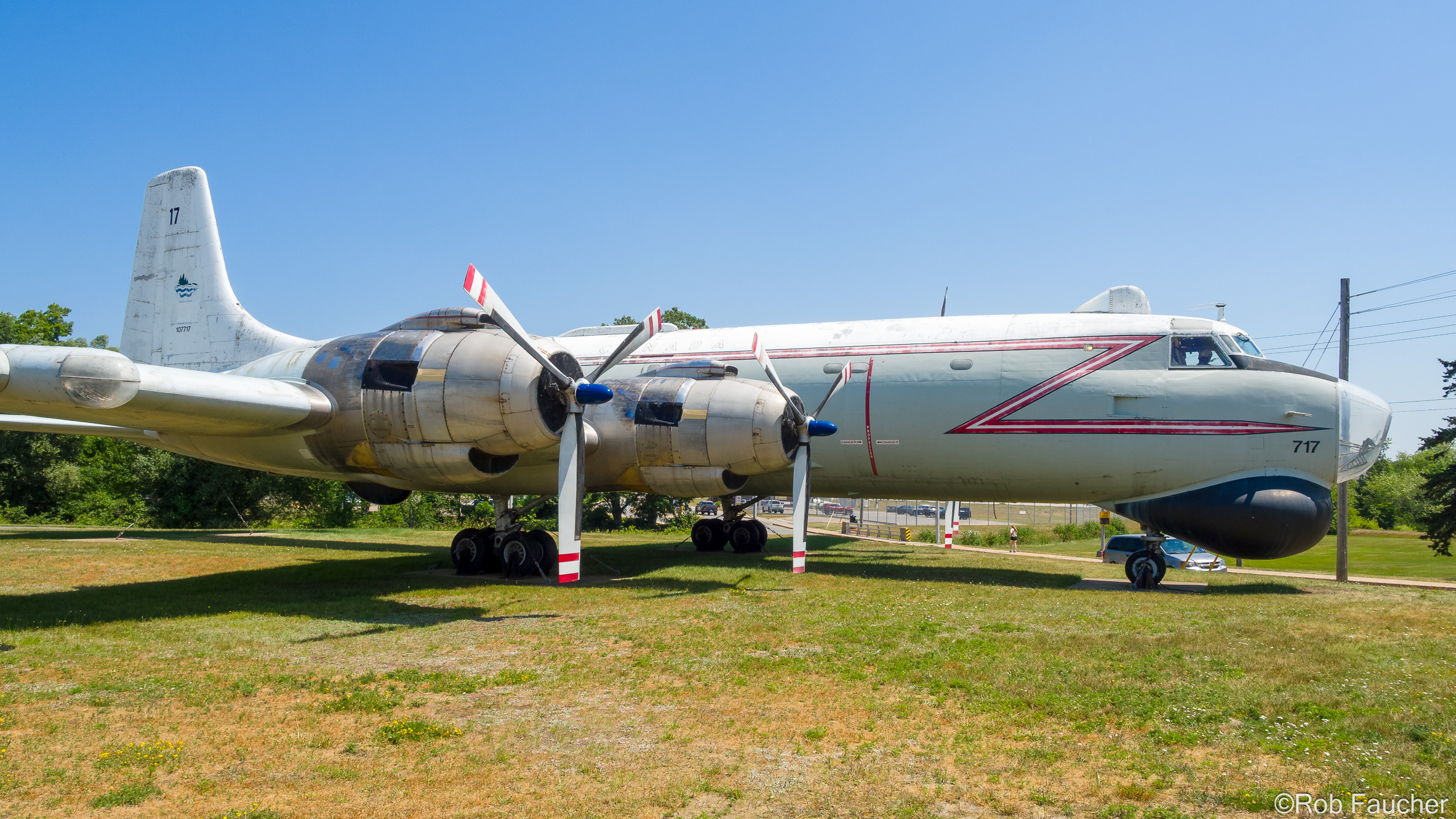
In my humble opinion, the Avro Lancaster Mark X and the Candair Argus CL28 (CP107) Mark II are the crown jewels in the museum’s collection. Much has been written about the Avro Lancaster, so I am not going to go into details here. As one of the most recognizable and famous heavy bombers of WWII, there is a wealth of information both online and in print available. The Canadian-built Argus deserves a few words here. When it first flew in 1957, it was one of the most advanced maritime patrol and anti-submarine warfare (ASW) aircraft in the world, perhaps the most advanced. It was a massive aircraft with a length of 132 ft 4.5 in (40.348 m), a wingspan of 142 ft 3.5 in (43.371 m), and a height of 40 ft 9 in (12.42 m). It actually dwarfed the American B-29 bomber, which was WWII’s largest operational bomber.
A Brief History of the Canadair Argus
The Argus was developed for the Royal Canadian Air Force during the Cold War. Built by Canadair in Montreal between 1957 and 1960, it was derived from the British Bristol Britannia airliner, retaining elements of its wings, tail and landing gear but with an entirely new unpressurized fuselage and powerful Wright R-3350 piston engines producing 3,700 horsepower. At the time of its production, the Argus was the largest aircraft ever manufactured in Canada, and 33 were built.
Its extensive electronic and sensor suite included powerful search radar, underwater listening equipment and sonobuoys, electronic countermeasures equipment, and a magnetic anomaly detector capable of detecting the disturbances caused by submerged metal objects. For nighttime searches it also carried a remotely controlled 70-million-candlepower searchlight, powerful enough to illuminate a submarine periscope from as far as 2.8 kilometres away. Its exceptional endurance allowed its 15-person crew to conduct missions lasting more than 24 hours, supported by onboard bunks and a galley.
The Argus was equipped with two large internal weapons bays and could carry a maximum internal weapons load of approximately 8,000 lb (3,630 kg). Depending on the mission, its armament could include air-dropped torpedoes, conventional bombs, naval mines and depth charges, including the 350-pound Mk. 54 depth bomb. The Argus also carried various signal and underwater sound charges used in anti-submarine operations. Some aircraft were used to test external weapons, including AGM-12 Bullpup missiles and 2.75-inch rockets, with an external load capacity listed at approximately 3,800 lb (1,700 kg), although these weapons were not adopted for normal operational service. Its principal offensive role remained anti-submarine warfare, with the combination of its sophisticated detection equipment and substantial weapons capacity allowing it to both locate and, if required, attack a detected submarine.
The Argus was a mainstay of Canadian maritime patrol operations, watching the country’s Atlantic and Pacific approaches and tracking submarines throughout much of the Cold War. Its endurance was legendary: in 1959, an Argus remained airborne for more than 31 hours without refuelling, establishing a Canadian military endurance record, while another aircraft reportedly completed an unofficial 32-hour flight in 1974 during a patrol and search mission. Regarded in its early years as among the world’s finest anti-submarine patrol aircraft, the Argus remained in front-line service until the early 1980s, when it was replaced by the CP-140 Aurora.
One man’s model work over 50 years
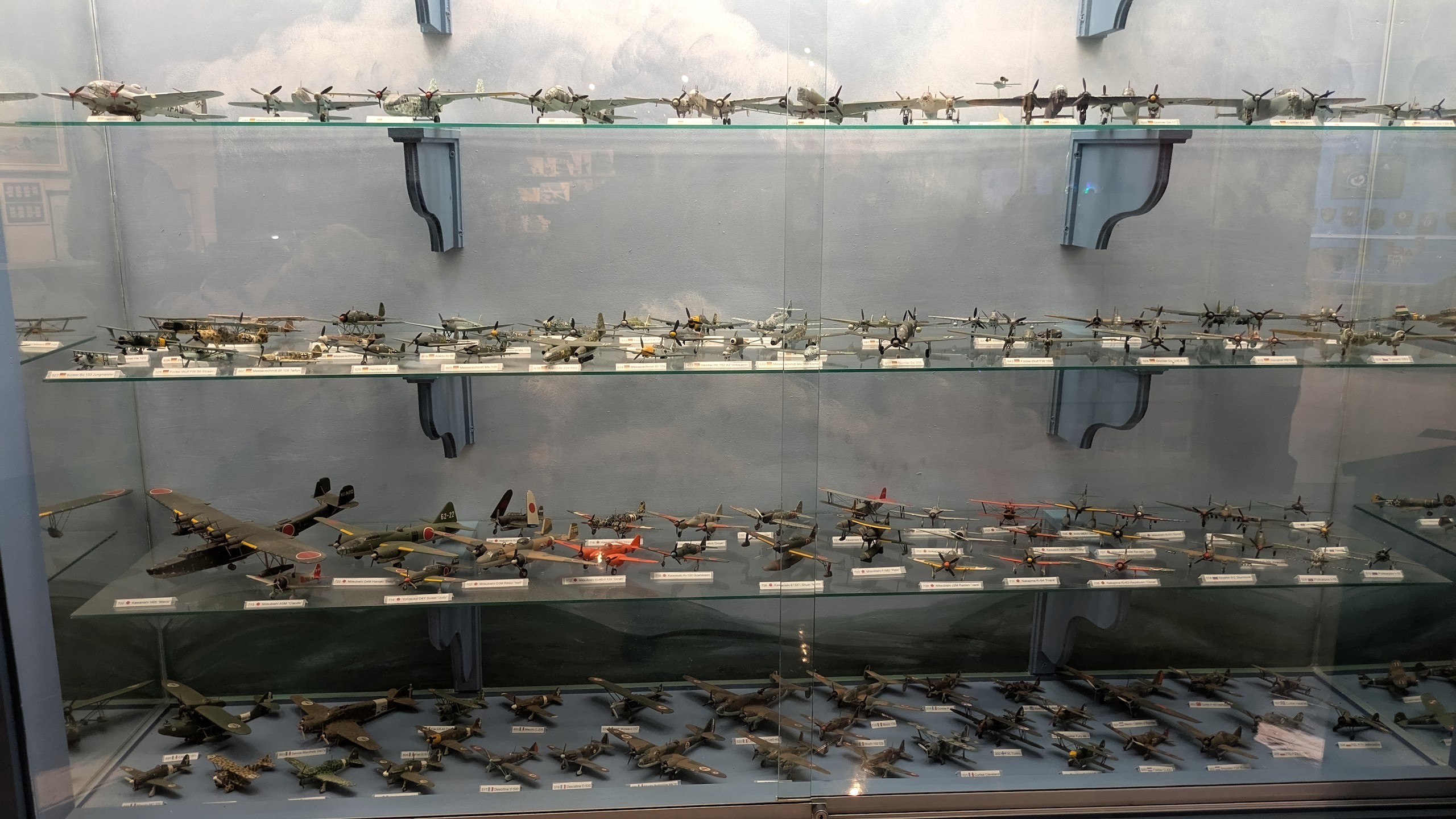
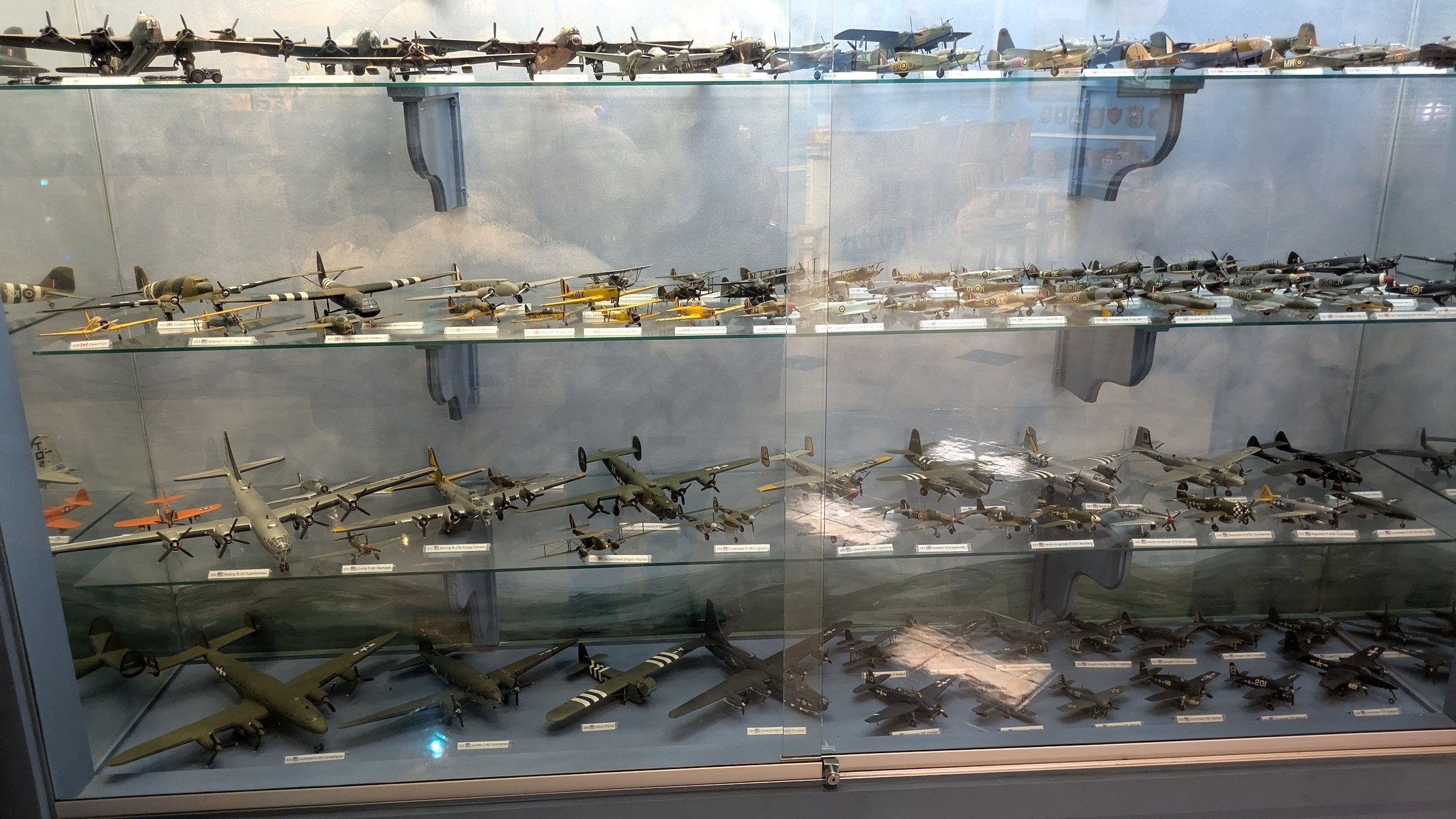
There was an impressive display of a few hundred 1/72 scale plastic models, consisting of WWII fighters, bombers, transports, gliders, etc. He donated his formidable collection to the musuem. The only thing I was able to learn from this display is that it is the work of one man over a 50-year period. There was an information kiosk near the display that was busted, so I was unable to learn anything more.
Back on the Road
After a satisfying and lengthy stay at the museum, it was back on the road. The temps averaged between 30C and 33C, so it was a hot one. I made my way to Pictou via side roads instead of the highway. There were plenty of twisty and turny roads cutting through a gorgeous countryside. However, the roads are not in the best condition, so a little bit of caution was required. Along the way, my phone lost its connection to the internet, rendering Google Maps useless. Yikes. I kept riding, hoping a nearby cellphone tower would restore the signal, and it did. By early afternoon, in the middle of nowhere, I was desperate for a location to rehydrate and top up the gas tank. After 30 mins or so, I found a lone country gas station, which only serves regular gas; the bike needs 91 or higher octane, but I did not care. The cold water and anemic gas were much appreciated.
After another hour or so of riding, thirst and fatigue were setting in. My arms and shoulders were sore from all that twisty and turny riding. By mid-afternoon, my journey had taken me full circle back to the Fundy Tidal Interpretive Centre—my first destination of this road trip. I pulled into the parking lot, removed my black motorcycle jacket, took out a bottle of water, and lit a small cigar. It was a welcome reprieve! Google Maps indicated I would not have time to check out the Stellerton Museum of Industry, as the predicted arrival time was 4PM, and the museum closes at 4:30PM. Given the day’s riding conditions, I knew 4PM was not a realistic arrival time. Pictou would be my next and final destination.
Pictou, Nova Scotia and a Man in Kilt
I arrived in Pictou around 5PM. Before checking into the hotel, I needed another water break and fuel. For those not well acquainted with the East Coast, Pictou is where you get the ferry back to PEI.
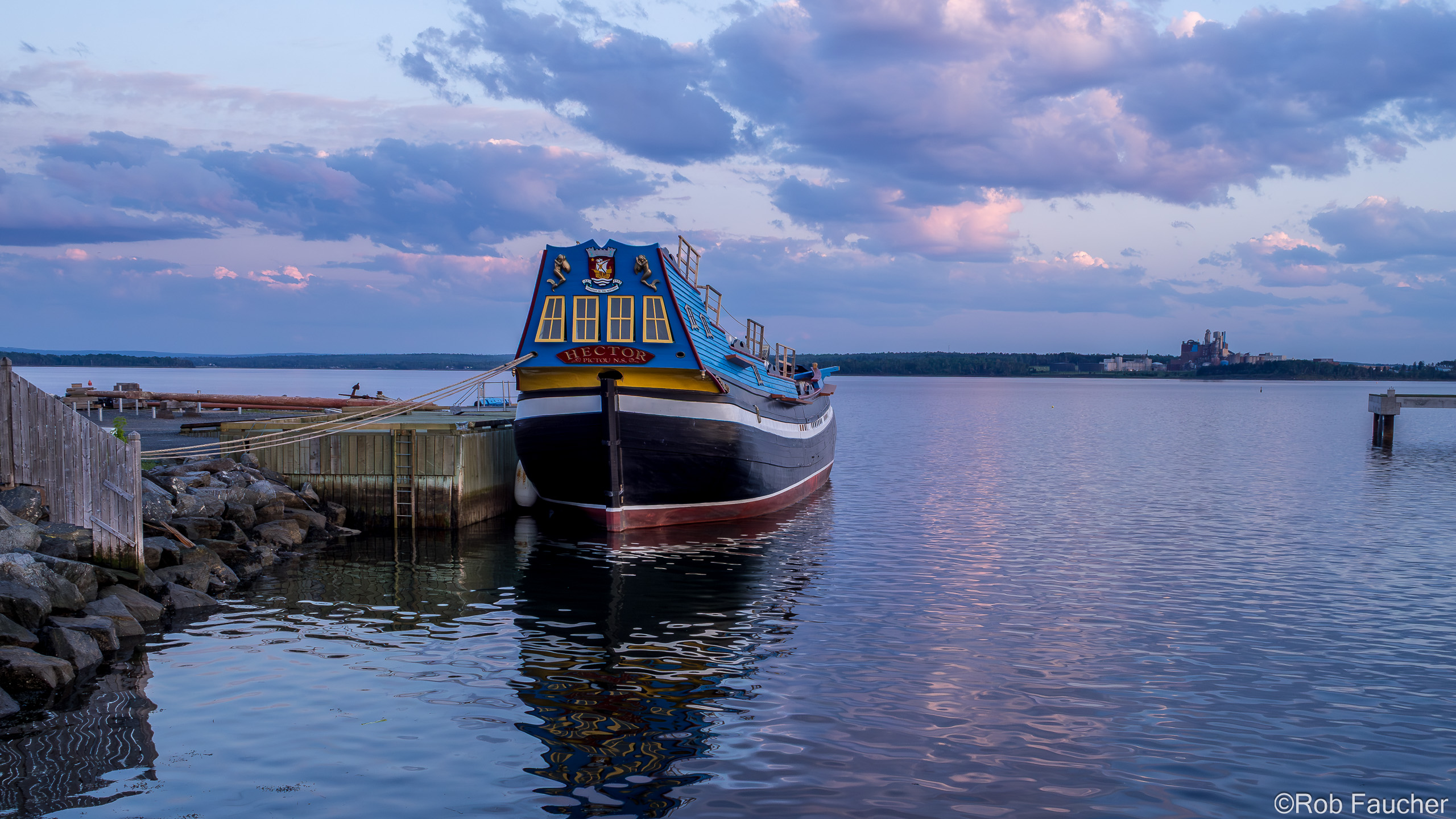
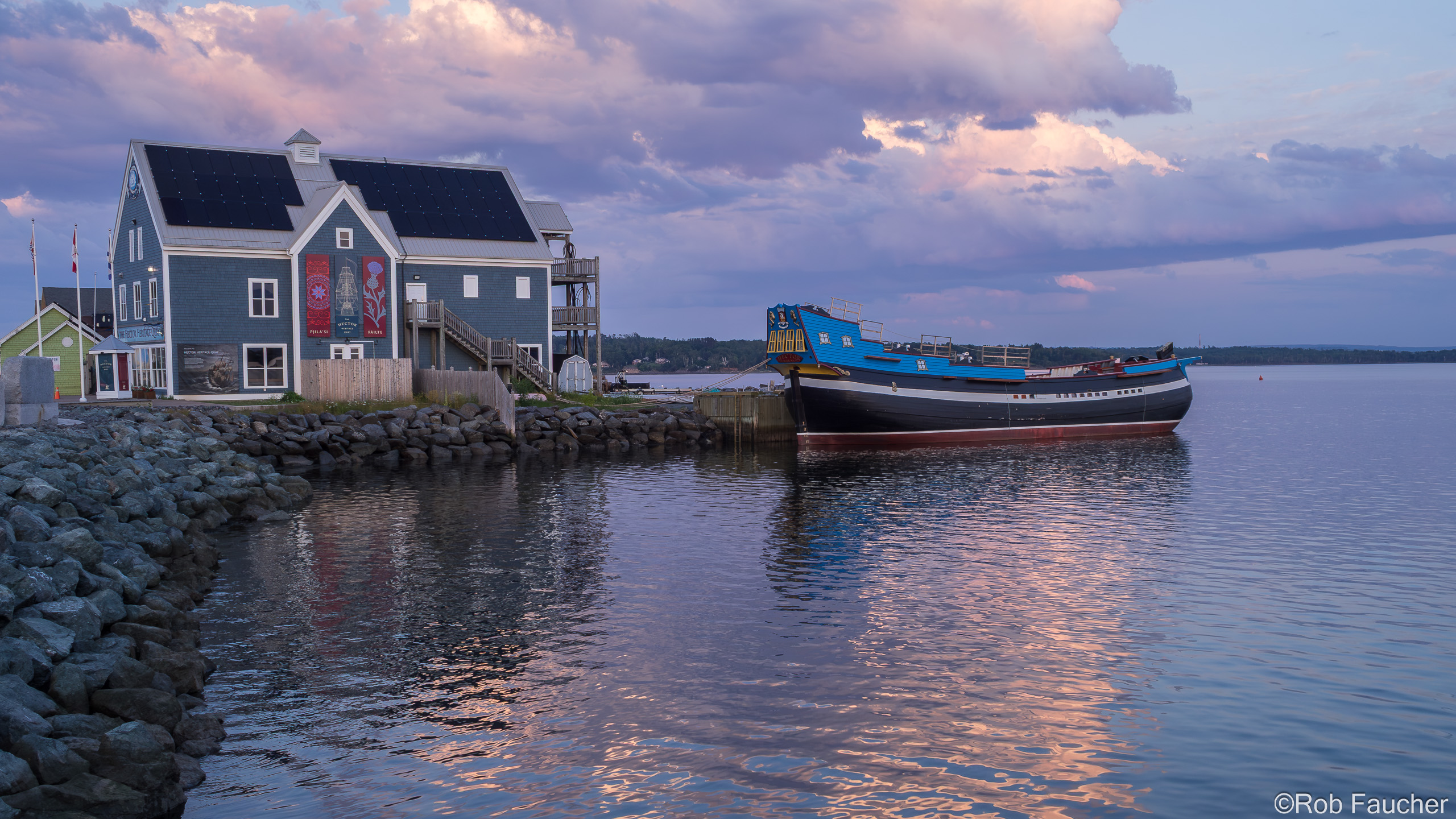
Pictou is one of Nova Scotia’s most historically significant towns and is often promoted as the “Birthplace of New Scotland.” Its best-known chapter began in 1773, when the Hector sailed from Scotland, carrying 189 Scottish Highland emigrants on an 11-week Atlantic crossing. Their arrival helped begin a major wave of Scottish immigration that shaped the culture of Nova Scotia. Today, that story is commemorated at Hector Heritage Quay, where a full-sized replica of the ship stands on Pictou’s historic waterfront. That’s the photo you see at the top of this page.
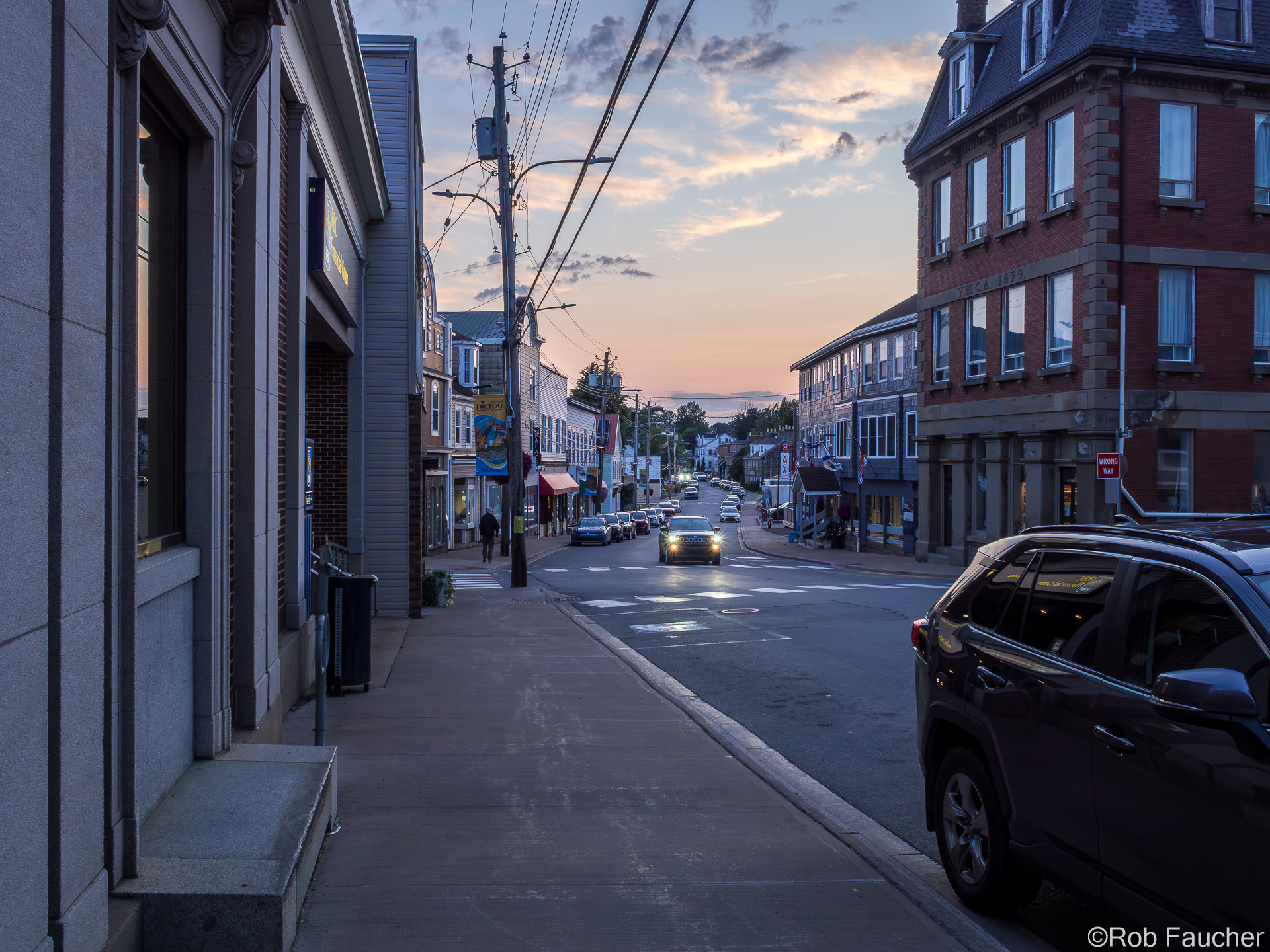
Pictou is also an established tourist destination, particularly for visitors interested in Scottish heritage and maritime history, it is more of a relaxed regional attraction than a heavily visited destination such as Halifax or Peggy’s Cove. Its compact waterfront features museums, galleries, restaurants, cultural events, and views across Pictou Harbour, while the town also makes a convenient base for exploring Nova Scotia’s Northumberland Shore and its warm-water beaches.
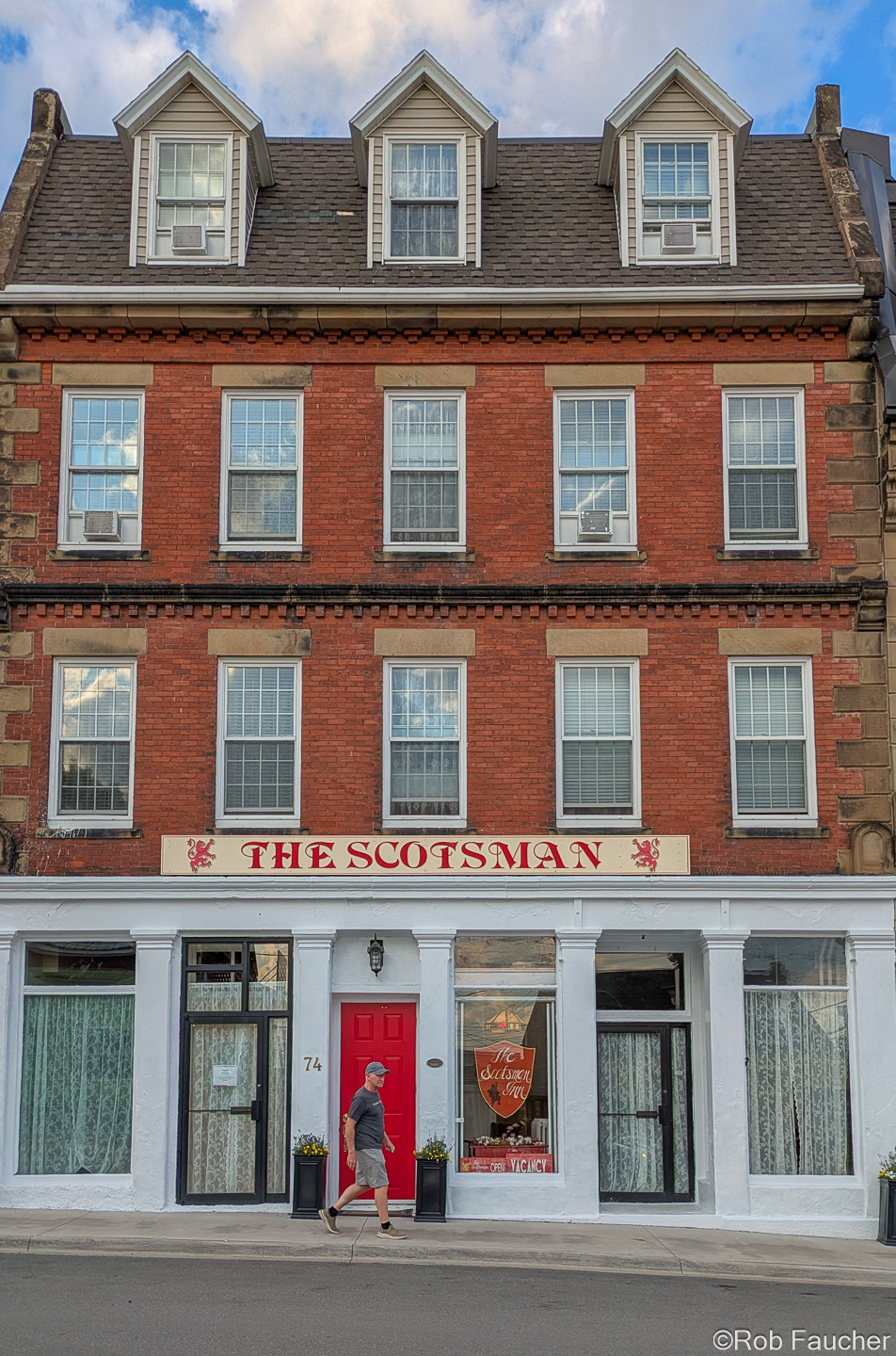
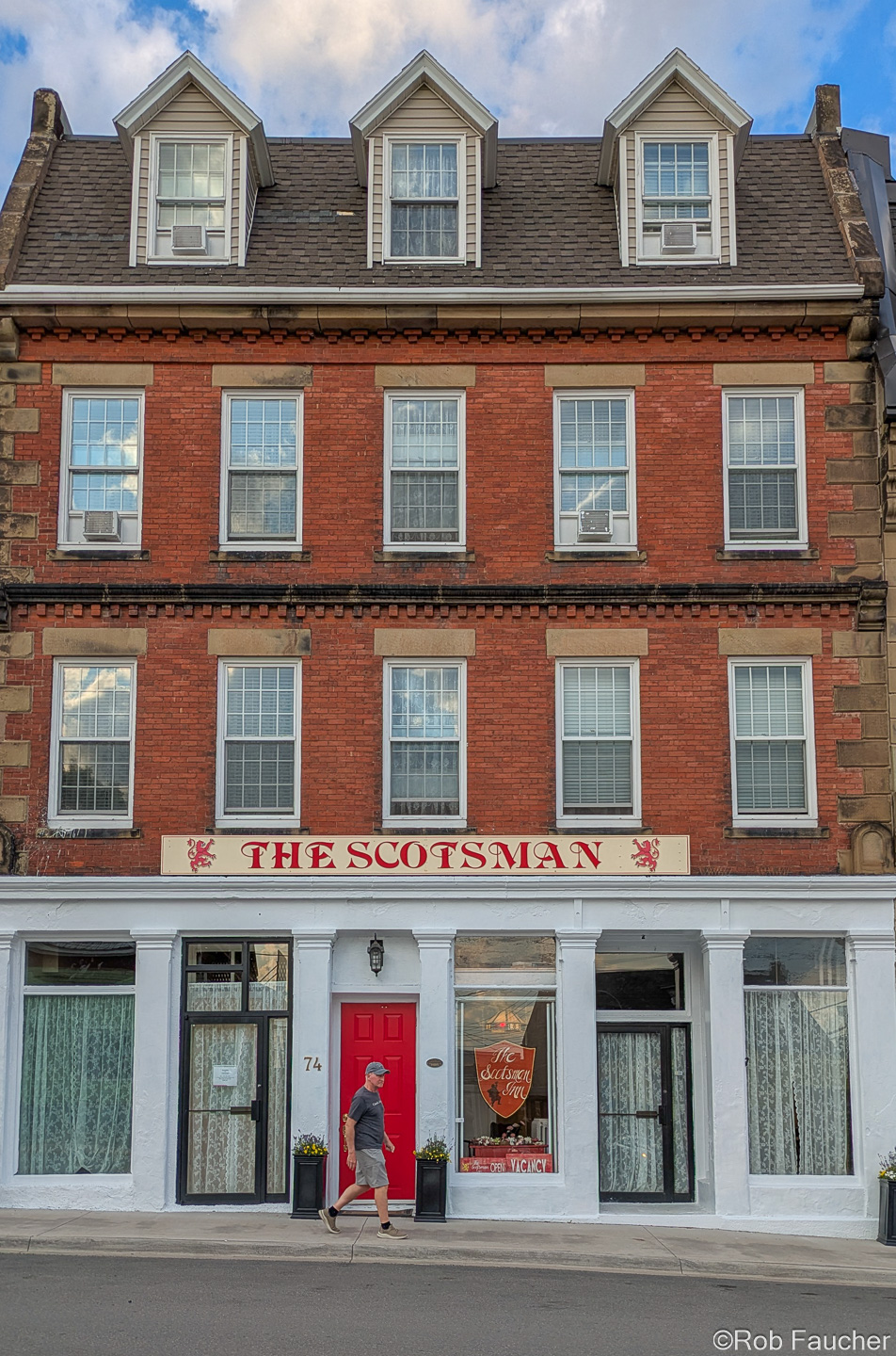
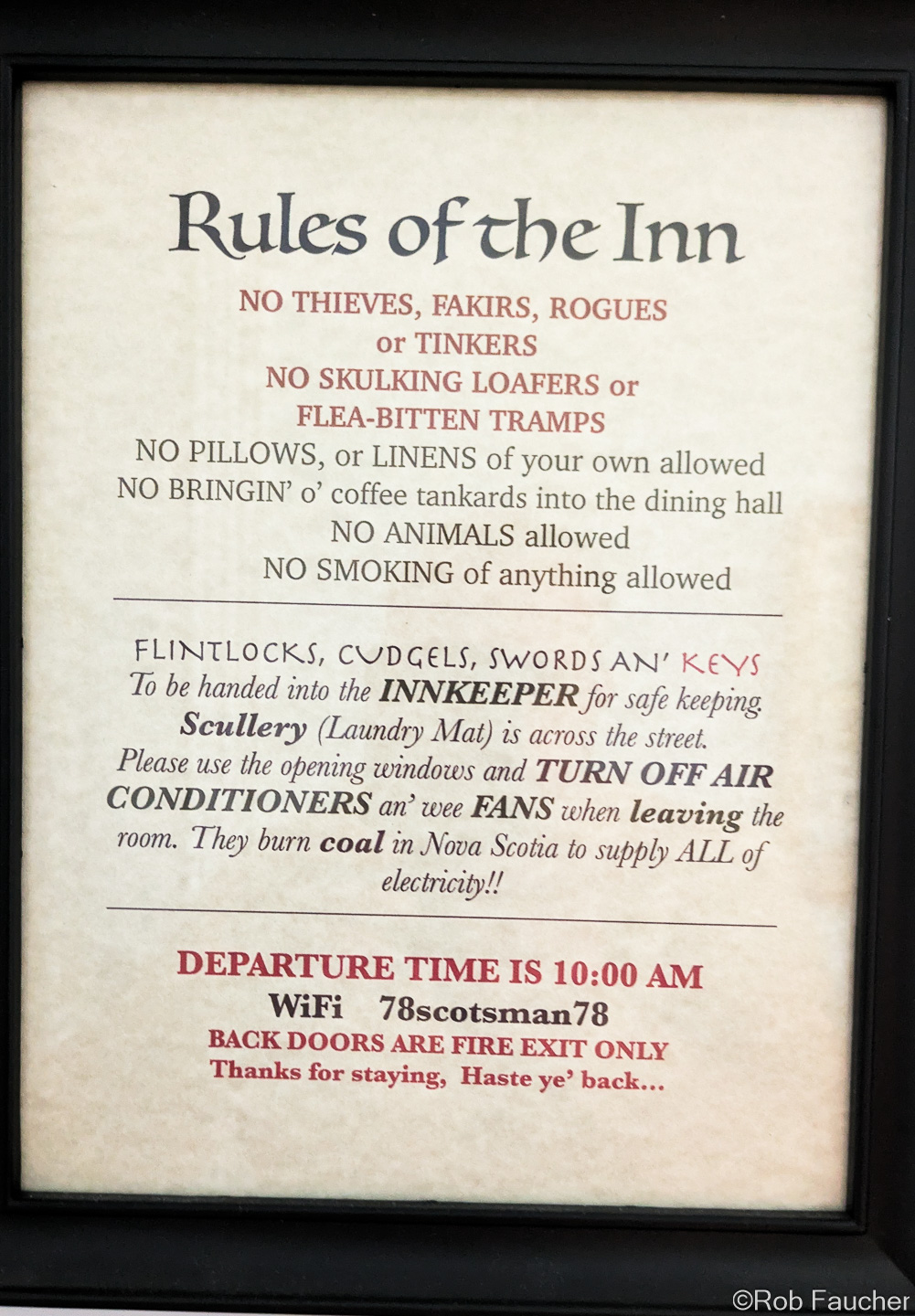
Being a popular summertime tourist destination, finding affordable accommodations right in town can be an expensive challenge. There are a number of hotels outside the downtown core, but I wanted to remain in town so I could enjoy dinner and a glass of beer or two. I found a reasonably priced room at the Scotsman Inn, right in the heart of town. The place is well named since the owners are Scottish. Their web page says you might have to climb stairs to your room—mine was at the very top. Checking in was easy, and Sandy, one of the owners, said they have a “Bike Barn” in the back for motorcyclists. This is a nice touch as the bike is parked in a locked barn overnight. Exhausted from the day’s heat, I carried all the luggage from my bike and climbed up the long set of stairs to my room. When I entered the room, I was dripping in sweat, and every inch of my t-shirt was soaked. The room was not cooled, so I went straight for the window AC unit, and it didn’t work! Thankfully it was just unplugged, so I got it running full blast. Once the room was sufficiently cool and I was no longer sweating buckets, I took a shower and put on a fresh shirt. Before going out for dinner, I noticed the Rules of the Inn, which have that unique Scottish combo of being curmudgeonly and irreverently funny.
As mentioned, Pictou is a historic tourist destination, so one would expect to find a number of decent restaurants. However, that is not the case. There are relatively few restaurants in town, a some close at 7PM, and most close around 8PM. It was 7:40PM, and I was being turned away from a few establishments as their kitchens were closing. Fortunately, I found a restaurant that would accommodate me. Dinner consisted of fried calamari, fish tacos, and fries. Not exactly gourmet, but it was filling. I washed it down with a few pints of Alexander Keith’s—a Nova Scotia brew. After dinner, I snapped a few photos of the Hector and surrounding areas. After 8PM, Pictou is a ghost town. There was nobody on the streets, and the only place open was a coin-op car wash. I smoked a joint watching the lone man wash his car and scanning for other signs of human life. I climbed back up the stairs, this time without armfuls of luggage and sweat-free. The room has no TV, so I ended the day watching YouTube videos.
I checked out just after 8 AM; the owners were serving a paid breakfast to their guests. Sandy was wearing a kilt, not something you see often in a Canadian hotel. I’m sure his guests appreciate it, though. I pulled the bike out of the inn’s “Bike Barn” and rode to the ferry terminal.
Meeting other bikers on the ferry to PEI
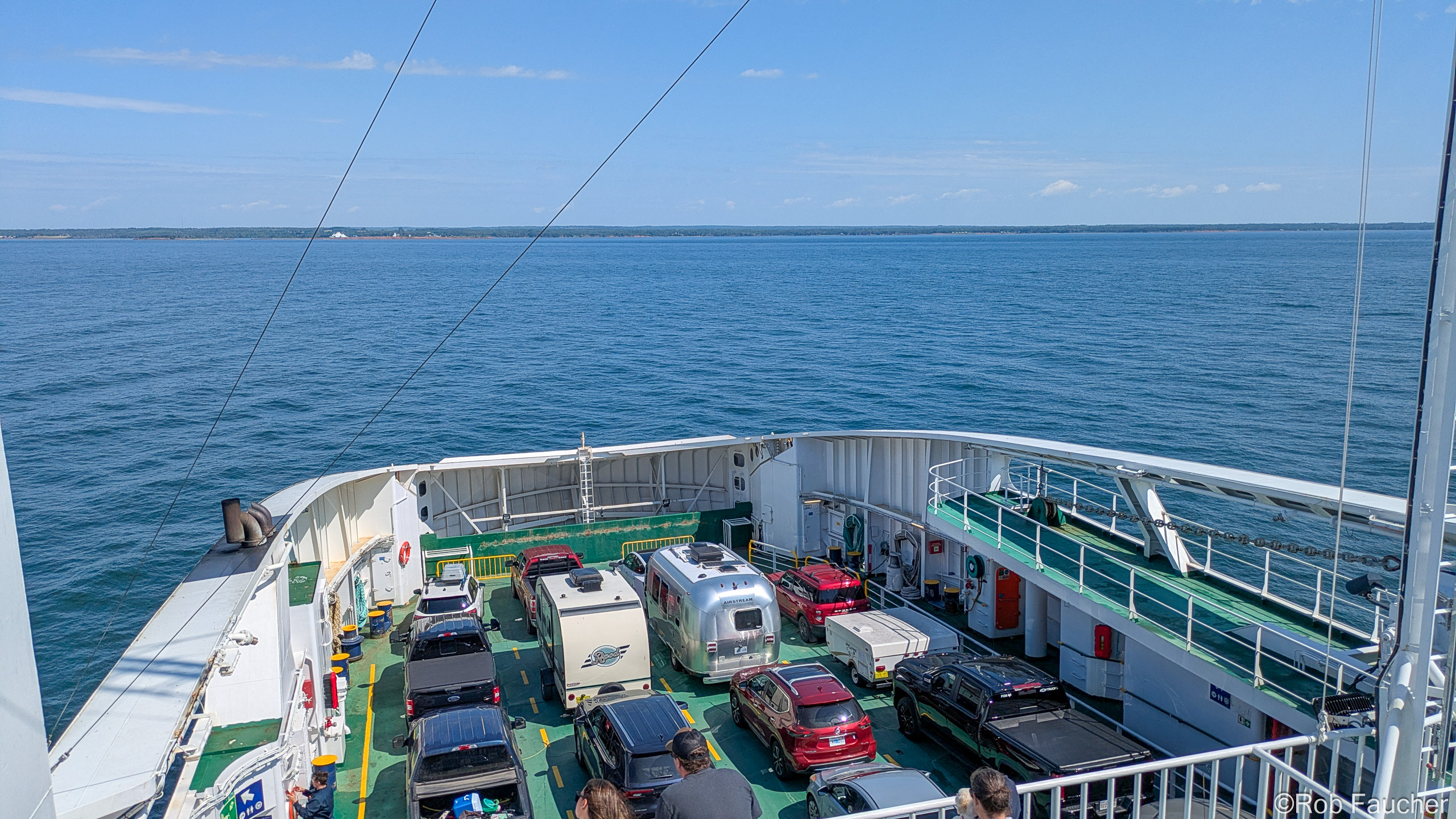
If you take the ferry from Pictou to Wood Island, PE, there is no cost, and bikers go in first so we can secure our bikes to the deck. There were three other riders, two on Hondas with Ontario plates and one on a Harley Ultra Glide with a Quebec plate. One of the Ontario bikers introduced himself; he is the owner of Trent Valley Honda in Peterborough, ON. He owns 17 bikes and rides around 60,000 kms per year. Nice! His buddy was an American from Florida. They were touring Canada’s east coast, and one can tell they are hardcore riders. We struck up a bit more conversation after boarding the ferry. They inquired about places to ride in PEI as well as accommodations and restaurants. I was happy to help anyway I could. The American is a retired homicide detective whose previous career was military intelligence and covert electronic surveillance. His military work had him stationed in a number of countries such as Germany and Asia. When I lived in America, I was developing simulator software for the US Dept. of Defence, so we had plenty to talk about. We are both geeks when it comes to this sort of thing, and the ferry ride passed by in the blink of an eye.
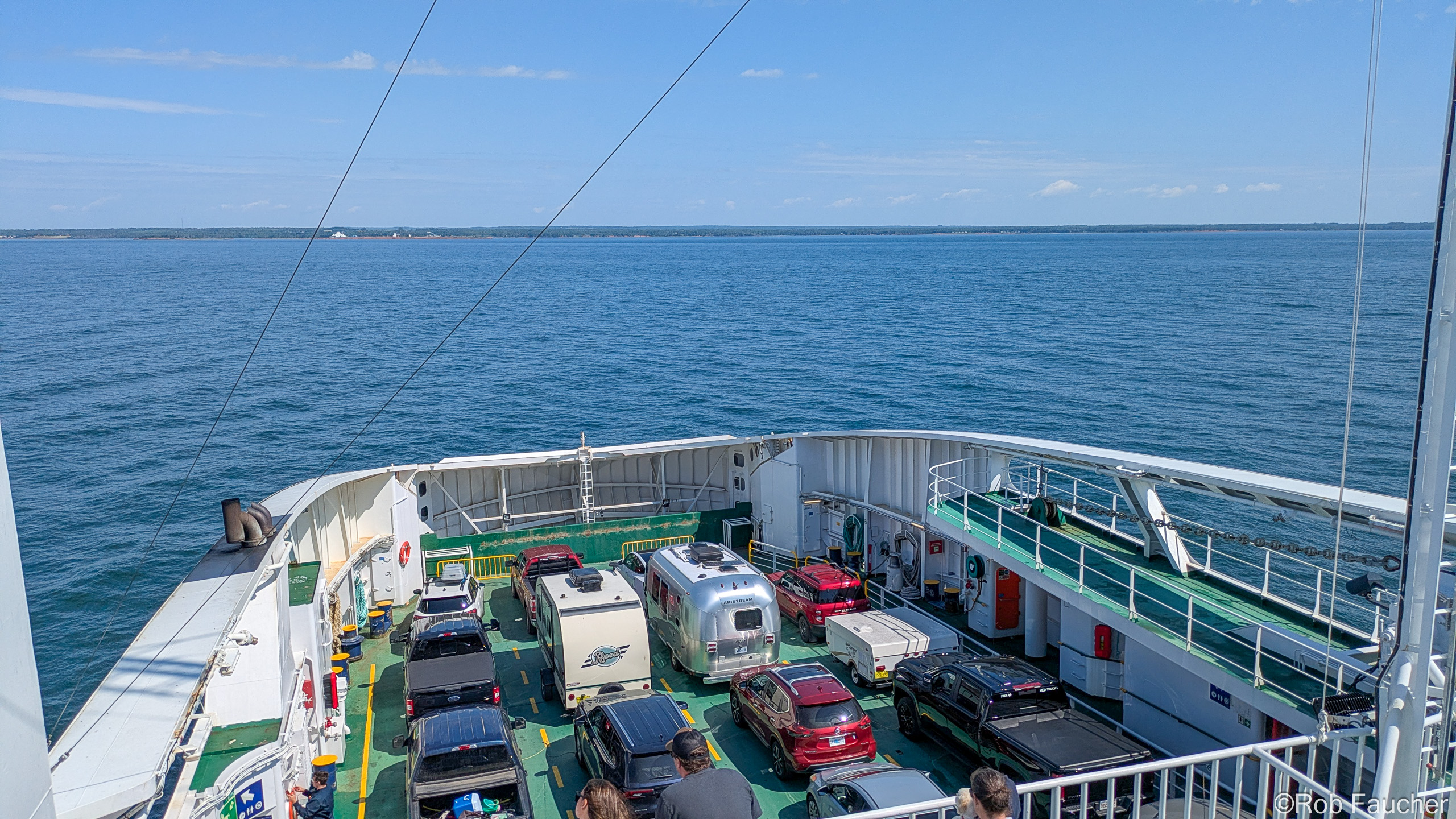
Once back in PEI, I called a buddy to meet for lunch in Montague. By the time I got home, I had logged over 1000 kms just over two days. It was good to be back in the saddle for a proper road trip. More to come.
Click the thumbnails to view images full-screen.